
Nusantara – Indonesia's new capital in the heart of Borneo
Share
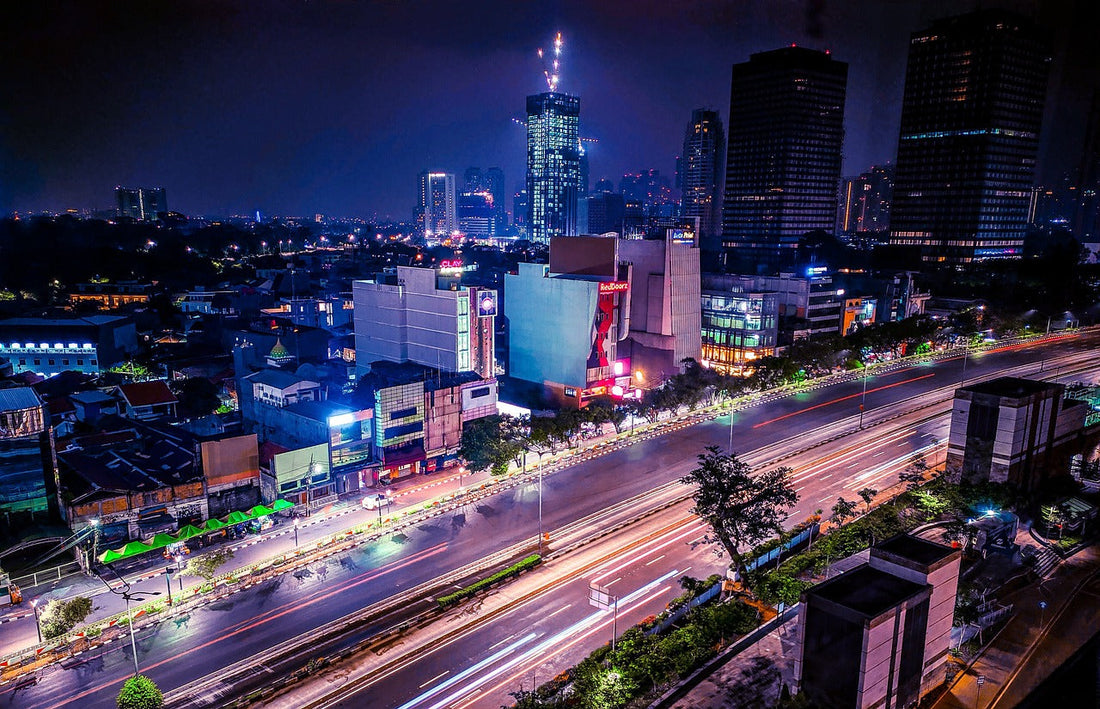
Indonesia is facing a historic transformation: With the construction of a new capital, the island nation is bidding farewell to Jakarta—a metropolis that has been the country's political and economic center for decades—not only symbolically but also functionally. However, Jakarta is grappling with massive problems: overpopulation, constant traffic gridlock, devastating air pollution, and gradual sinking due to excessive groundwater use. In some districts, the ground is sinking by several centimeters every year, which, combined with rising sea levels, presents an alarming scenario.
Against this backdrop, President Joko Widodo announced an ambitious plan in 2019: the construction of a new capital city – Nusantara – in the province of East Kalimantan on the island of Borneo. This region is geographically more advantageously located in the center of the country and is intended to symbolically and practically create greater balance within the vast archipelago. The name “Nusantara” comes from Old Javanese and roughly translates to “island kingdom” or “archipelago” – a deliberate choice to represent the diversity and unity of the nation.
Nusantara is being built in a previously sparsely populated region near the cities of Balikpapan and Samarinda. The area is characterized by tropical rainforest, hills, and rivers – a natural environment of great ecological importance, but also sensitive to development. This is precisely one of the project's most critical points: While the government speaks of a "green," sustainable, and smart city, environmentalists are sounding the alarm. They fear that the construction could endanger the habitats of numerous animal species – such as the endangered orangutans. Indigenous groups in the region have also already expressed concerns regarding land expropriation and cultural encroachment.
Despite these controversies, the government is pushing the project forward rapidly. Nusantara is intended to eventually accommodate up to 1.5 million people, with the initial focus on the government district. The first institutions, such as ministries and the presidential palace, are expected to relocate in the coming years – the move was originally planned for 2024, coinciding with the end of President Widodo's term. However, the Covid-19 pandemic and economic uncertainties have caused delays, pushing back many of the timelines.
Nusantara's vision is ambitious: modern architecture, climate-neutral mobility, solar power plants, green roofs, and urban agriculture – a metropolis of the future, built from the ground up. The project is supported by international investors, although the majority of the initial funding comes from the state budget. A modular development in several phases is planned, which could extend over decades. Full completion is currently not expected before 2045 – coinciding with the 100th anniversary of Indonesia's independence.
The decision to build a new capital city is reminiscent of other countries facing similar challenges. For example, Brazil moved its capital from Rio de Janeiro to the then newly built Brasília in the 1960s – also with the aim of achieving more balanced development. Nigeria followed a similar path, relocating from Lagos to Abuja. Indonesia is now following this international example, but adapting it to its own geographical, cultural, and environmental circumstances.
Whether Nusantara will be a success depends on many factors: its environmental impact, its social interaction with local communities, its economic viability – and, not least, whether the city can truly live up to its claim of being a sustainable model. One thing is certain, however: the project is one of the largest and most ambitious urban development projects of the 21st century and could have a lasting impact on Indonesia's future.